
HORTINOVA Inc.
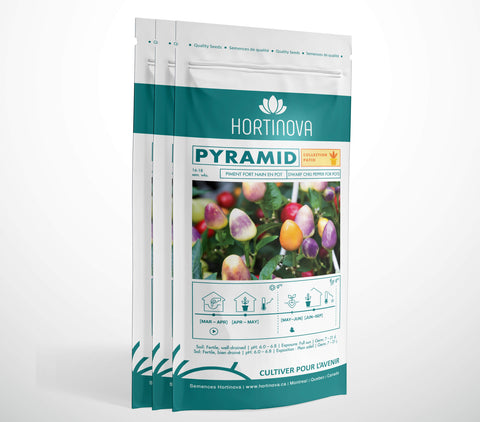
PYRAMID Chili Pepper Seeds – Compact Ornamental Hot Pepper for Pots, Patio & Gardens
 Sowing

- When to sow: Start seeds indoors 8–10 weeks before the last expected frost.
- Containers: Use seed trays or small pots with good drainage.
- Soil: Light, well-draining seed starting mix enriched with compost or coconut coir.
- Depth: Sow seeds about 0.5–1 cm deep.
- Moisture: Keep evenly moist but not soggy; cover lightly with vermiculite to retain humidity.
- Light: Place under grow lights or a bright windowsill with 12–14 hours of light daily.
- Germination: Typically 8–21 days at 22–28 °C.
 Grow

THIN
- Once seedlings develop two true leaves, thin to the strongest plants.
- Transplant into 7–10 cm pots if multiple seedlings share the same cell.
PLANT OUT
- Harden off plants by gradually exposing them to outdoor conditions for 7–10 days.
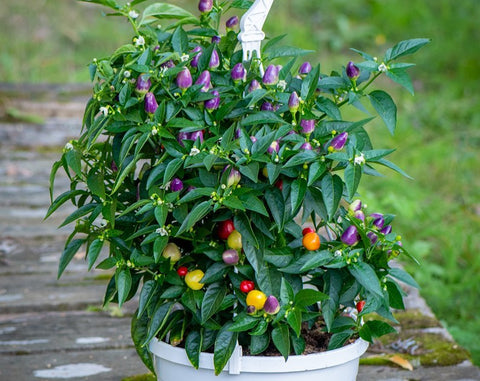
- Transplant into pots 20–30 cm wide, using one plant per container.
- Use a high-quality potting mix enriched with compost or slow-release fertilizer.
EXPOSURE
- Place pots in full sun (at least 6–8 hours daily).
- Choose a sheltered spot away from strong winds.
TEMPERATURE
- Optimum growth: 20–28 °C daytime, not below 15 °C nighttime.
- Move pots indoors or cover with fleece if temperatures drop.
SUPPORT
- Compact peppers are self-supporting but may need small stakes if heavy with fruit.
- For decorative or patio use, allow natural bush form.
PRUNING
- Minimal pruning required. Pinch out early flower buds if stronger vegetative growth is desired.
- Light pruning after the first flush can encourage branching and extended harvest.
WATER
- Keep soil evenly moist; avoid both drying out and waterlogging.
- Water at the base to keep foliage dry and reduce disease risk.
- Containers may need daily watering in hot weather.
FEED
- Begin feeding 2 weeks after transplanting.
- Use a balanced fertilizer early (e.g. 10-10-10), then switch to high-potassium fertilizer when plants set fruit.
- Liquid seaweed or compost tea every 2 weeks boosts vigor and fruiting.
PROTECT
- Watch for aphids, whiteflies, and spider mites; treat with insecticidal soap if needed.
- Protect from cold nights with fleece or by moving pots indoors.
- Mulch the surface with straw or bark to conserve moisture.
 Harvest

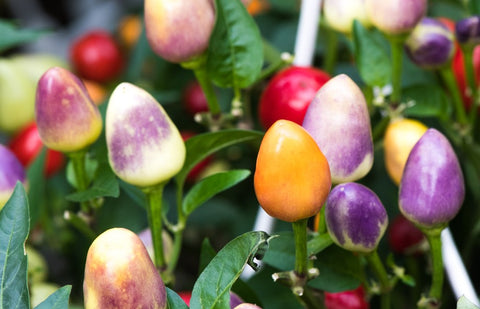
- When to harvest: Pick fruits once they reach full color (red, purple, orange, etc. depending on variety).
- For ornamental types, multiple colors may appear at once.
- Frequency: Regular harvesting encourages further fruit set.
- How to harvest: Cut peppers with scissors or pruners to avoid damaging branches.
- Use: Fresh in sauces, salsas, or stir-fries; dry whole or as powder; freeze for long-term storage.